
Portland guide · 9 min read
10 Signs Your Portland Gutters Need Cleaning: A 2026 Homeowner's Visual Checklist
Ten visible signs tell Portland, Oregon homeowners in 2026 that gutters need cleaning: water spilling over edges during rain, plants growing in gutters, sagging downspouts, staining on siding, pooling at the foundation, animal nests, fascia rot, basement moisture, fir needles visible from the ground, and seasonal indicators tied to October-November debris drop. Most checks can be done safely from the ground; one positive sign justifies booking a professional clean.
By Monte Wallenstein Published
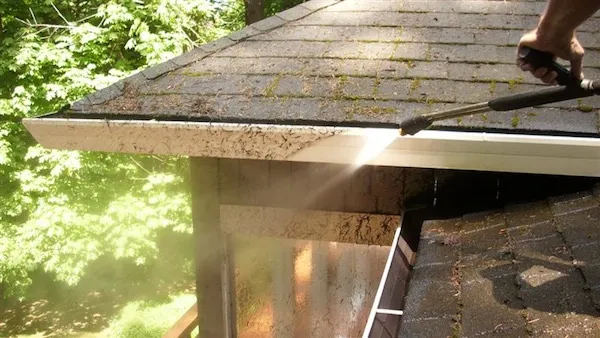
Ten visible signs tell Portland, Oregon homeowners in 2026 that gutters need cleaning: water spilling over edges during rain, plants growing in the gutter, sagging downspouts, staining on siding below gutter runs, pooling water near the foundation, animal nests, fascia rot, basement moisture, fir needles visible from the ground, and seasonal indicators tied to the October-November debris drop. Most checks can be done safely from ground level. One positive sign is enough to justify booking a gutter cleaning; two or more is urgent.
This guide walks through each sign, what it means structurally, when it’s safe to address yourself, and when to call a professional. We have been cleaning Portland metro gutters since 2009 under Monte and USA Gutter, and these are the visible patterns we see on first-call homes every week.
The 10 signs, in numbered order
1. Water spilling over the front edge during rain
This is the clearest sign. Stand under cover during a real Portland rain — one of the November or January atmospheric river storms, not a drizzle — and watch each elevation of your gutter line.
What functioning gutters look like: water enters the gutter trough cleanly and channels to the downspouts. No sheeting over the front lip. No streams hitting the landscape.
What clogged gutters look like: water cascades over the front edge in a curtain, sometimes the full length of a gutter run. This is the gutter telling you the trough is full of debris and water can’t reach the downspout.
Structural meaning: every minute of overflow during a major storm puts water on your foundation, against your siding, and behind your fascia. Two seasons of this and you have fascia rot. Three seasons and you have crawl-space moisture problems.
2. Plants growing in the gutter
Visible greenery rising above the gutter line — maple seedlings, grass, ferns, moss, occasionally young alders — means the gutter has been holding decomposed organic matter long enough to form a soil substrate.
What it means structurally: the trough is full to capacity. The plants are also tap-rooting into seams, accelerating leak development. The weight of saturated soil-and-vegetation is also bending the gutter hangers downward.
How to spot from the ground: look up at the gutter line from across the street or yard. Anything green sticking up above the front edge of the gutter is visible from below.
3. Sagging gutter sections or pulling-away downspouts
A gutter that’s tilting outward from the fascia, sagging in the middle of a run, or visibly pulling at the hangers is overloaded. Properly functioning gutters sit level (or with a very slight pitch toward the downspout) and snug to the fascia.
What it means structurally: the gutter is carrying more weight than the hangers were designed to support — usually saturated debris plus standing water. Left alone, the hangers eventually fail and the gutter pulls off the fascia entirely, taking pieces of fascia with it.
4. Vertical staining on siding below the gutter
Dark vertical streaks on siding directly below the gutter line — visible especially on white, beige, or light gray siding — are caused by water sheeting over the gutter edge and running down the siding. The stains are organic-matter-laden water leaving its mark.
What it means structurally: even when the gutter isn’t visibly overflowing right now, it has overflowed often enough to mark the siding. The water is also soaking into wood trim, behind siding laps, and eventually into the sheathing.
5. Pooling water near the foundation
After a Portland rain, walk the perimeter of your home. Look for puddles, soggy soil, mossy ground patches, or pooled water within 3–6 feet of the foundation, especially directly below downspout terminations.
What it means structurally: downspouts are not carrying water far enough from the foundation, often because they’re clogged at the elbow or the underground drain line is full of debris pushed down from years of gutter neglect. Foundation pooling is the leading cause of crawl-space moisture, basement seepage, and concrete heave in PNW homes.
6. Animal nests in gutters or downspouts
Birds, squirrels, and occasionally rats build nests in gutters that have accumulated enough debris to provide structural support. You’ll see twigs sticking out, hear chirping, or notice repeated bird traffic to a specific gutter section.
What it means structurally: the gutter is providing a stable platform — which means it’s full enough of compacted debris to support a nest. The nest itself is now a 100% blockage at that point. Squirrel nests in particular can also damage shingles where the squirrels access them.
7. Soft or discolored fascia (rot)
Fascia is the horizontal board the gutter attaches to. When gutters chronically overflow, water sits against the fascia and behind the gutter, and the wood rots from the back forward — often invisible until well advanced.
Visible signs from the ground:
- Peeling paint on fascia directly behind a gutter
- Dark staining or streaks on fascia
- Visible sagging or warping of the fascia board
- A gutter that’s pulled away from the fascia at one or both ends
The screwdriver test (from the ground level under each gutter run): tap the fascia firmly with a screwdriver handle. Solid wood produces a sharp thump; rotted wood produces a hollow, soft, or punky sound. If you hear punky on multiple sections, the fascia is compromised.
Repair cost reality: $400–$1,500+ for fascia replacement, depending on run length. Catching this before it spreads saves thousands.
8. Basement or crawl-space moisture
If you notice musty smells, visible moisture, or efflorescence (white salt deposits) in your basement or crawl space, foundation water intrusion is the first thing to check. Clogged gutters and underground drain lines are the most common upstream cause.
The connection: overflowing gutters dump water at the foundation. Saturated foundation soil pushes moisture through concrete walls into the basement or crawl space. The fix often starts with the gutter, not the basement.
Severity: basement moisture leading to mold remediation runs $1,000–$5,000+. Crawl-space encapsulation runs $5,000–$15,000. Maintaining the gutters is the upstream prevention.
9. Ice dams (rare in Portland but possible)
Ice dams form when water freezes at the roof edge, creating a barrier that backs up water under the shingles. Portland’s relatively mild winters make true ice dams uncommon, but they do occur during hard freeze events — December 2008, January 2017, and January 2024 all produced ice dam damage on Portland homes.
The connection to gutters: clogged gutters dramatically increase ice dam risk. Trapped debris holds water that freezes into a solid mass at the roof edge. Open, clean gutters drain before freezing.
What to watch for: icicles hanging off the roof edge during cold snaps, especially if they’re forming behind the gutter rather than off the front lip. Visible ice buildup along the gutter line is a strong indicator of clogged gutters under freezing conditions.
10. Visible fir needles or debris from the ground
By late October in most Portland neighborhoods, Douglas fir and western red cedar needle drop is in full swing. If you can stand on the ground and see needles sticking up above your gutter line, the gutter is significantly clogged.
Seasonal timing for Portland:
- Late spring (May–June): Douglas fir cone drop adds debris weight
- Summer (July–September): Light needle litter; gutters generally hold steady
- October–November: Peak fall debris — the busiest two months in the trade
- December–January: Whatever wasn’t cleaned in fall is now saturated and frozen
- February–April: Moss season — algae and moss begin establishing in standing-water gutters
The October-November peak is when most Portland homeowners notice the problem. Booking in late September secures crew availability before the rush.
The five ground-level checks (no ladder required)
You can do a thorough Portland gutter inspection from the ground in 15 minutes:
- Watch during real rain — observe each elevation for overflow
- Look up at the gutter line — anything green or sticking up is debris
- Scan siding below each gutter run — vertical staining means past overflow
- Walk the perimeter — look for pooling water near the foundation
- Tap the fascia from below with a screwdriver handle — hollow sounds mean rot
These five checks identify 80–90% of gutters that need cleaning, without anyone leaving the ground.
What each sign means in dollar terms
| Sign | Approximate cost if ignored |
|---|---|
| Overflow during rain | $250–$450 in gutter cleaning + escalating siding damage |
| Plants in gutters | Same cleaning cost, more labor |
| Sagging downspouts | $100–$400 in re-securing or replacement |
| Siding staining | Soft-wash siding clean: $400–$900 |
| Foundation pooling | $1,000–$5,000+ in basement remediation |
| Animal nests | $250–$450 cleaning + possible shingle repair |
| Fascia rot | $400–$1,500+ in fascia replacement |
| Basement moisture | $1,000–$15,000+ depending on severity |
| Ice dam damage | $500–$3,000+ in roof and gutter repair |
| Visible fir needles | $250–$450 cleaning + risk escalation if ignored |
Compared against $250–$450 for a professional cleaning twice a year, the math is one-sided.
When DIY-checking is fine, and when to call
Safe DIY territory:
- Ground-level visual inspection (always)
- Single-story homes with light debris on flat or low-pitch roof
- Dry, clear-weather conditions
- Stable, level ladder placement on flat ground
Call a professional:
- Any two-story or taller home
- Hillside slope where ladder placement is unstable
- Signs of fascia rot, sagging gutters, or downspout damage
- Active overflow despite recent cleaning (suggests underground drain blockage)
- Anything you’d hesitate to do in the rain
Ladder falls are the leading cause of homeowner injury in exterior maintenance. Most professional cleanings in the Portland metro run $150–$450 — see our cost guide for the full breakdown — which is cheap insurance against an ER visit.
Neighborhood patterns we see
The signs above show up most heavily in:
- Eastmoreland, Laurelhurst, Alameda — mature tree canopy, heavy Douglas fir and big-leaf maple drop
- Sellwood and Multnomah Village — conifer-dense lots, older gutters
- The West Hills, Forest Park, Skyline — hillside drainage challenges plus mature trees
- Lake Oswego and West Linn — large properties under heavy tree cover; debris loads at the high end
- Beaverton and Tigard — newer construction with less tree cover but longer perimeters
If you’re in one of these neighborhoods and haven’t cleaned in 12+ months, run the five ground checks this weekend.
When to schedule the cleaning
For most Portland homes:
- Once a year minimum — typically late October or early November after fall drop
- Twice a year ideal — fall (October–November) plus spring (March–April) catches the moss-season debris
- Quarterly for homes under heavy Douglas fir or West Hills canopy
See our frequency guide for the full PNW schedule, and our DIY vs professional comparison for where the line is.
Quick Recap
- The most reliable sign is water spilling over the gutter edge during real rain — go watch yours during the next downpour.
- Plants growing in gutters, sagging downspouts, siding staining, foundation pooling, animal nests, fascia rot, basement moisture, ice dams, and visible fir needles round out the 10 signs.
- Five ground-level checks catch 80–90% of gutters that need cleaning: rain watch, look up, siding scan, perimeter walk, fascia tap.
- Fascia rot caught early ($400–$1,500 repair) versus ignored (eventual full eave rebuild, thousands) saves you the most money long-term.
- Portland’s October-November Douglas fir and western red cedar drop is the peak season — book by late September to secure your slot.
- Two-story, hillside, or rot-suspected jobs are professional work; ground checks are always DIY.
Frequently asked questions
- What is the most reliable sign that my Portland gutters need cleaning?
- The most reliable sign is water spilling over the front edge of the gutter during a heavy Portland rain. If you stand under cover and watch the gutter line during a real downpour, properly functioning gutters channel water cleanly into downspouts; clogged gutters sheet water over the front lip onto landscape, walkways, or your foundation. This single check, done during one of the November atmospheric river storms, tells you everything.
- Can plants really grow inside Portland gutters?
- Yes, and it is one of the most common signs of long-overdue cleaning in Portland. Decomposed Douglas fir needles, big-leaf maple leaves, and seeds from neighboring trees form a soil-like substrate in the gutter trough. Maple seedlings, grass, ferns, and occasionally small alder saplings establish in this material. Visible greenery rising above the gutter line means your gutters have been holding water and organic matter long enough for an ecosystem.
- What does fascia rot from clogged gutters look like in Portland?
- Fascia rot from clogged Portland gutters appears as soft, discolored, or dark-streaked wood directly behind or below the gutter. Tap-test the fascia with a screwdriver handle from the ground; a hollow or punky sound means rot. Visible peeling paint, sagging gutter sections, and water staining streaking down the fascia all indicate the gutter has been holding water against the wood. Catching this early saves $400 to $1,500 in fascia replacement.
- If I see Douglas fir needles in my gutters, do I need to clean immediately?
- Visible Douglas fir needles in your gutters from the ground level in Portland mean the gutters are at the late stage of fall debris buildup and should be cleaned within two to four weeks. Fir needles are the hardest debris to clear because they weave into a wet mat that holds water and accelerates further accumulation. Once needles are visible from the ground, the gutter is significantly compromised and overflow is imminent in the next heavy rain.
- How can I check my gutters without climbing a ladder?
- You can do a thorough Portland gutter inspection from the ground using five checks: watch the gutter line during a real rain, look for plants or debris visible above the gutter edge, scan the siding below each gutter run for vertical staining streaks, walk the perimeter and look for pooling water near the foundation, and tap the fascia from below for hollow-rot sounds. These five ground-level checks identify 80 to 90 percent of gutters that need cleaning.
- Are ice dams a real concern for Portland gutters?
- Ice dams are rare but real in Portland, occurring during the occasional hard freeze events when temperatures drop into the teens and remain below freezing for multiple days. Clogged gutters dramatically increase ice dam risk because trapped debris holds water that freezes into a barrier at the roof edge. Most years Portland avoids true ice dams, but the 2008, 2017, and 2024 winter storm events all produced ice dam damage on homes with clogged gutters.
- When should I call a professional versus DIY-cleaning my own gutters?
- Call a professional if you see any combination of multi-story access, signs of fascia or downspout damage, visible plant growth, or persistent overflow despite a recent DIY clean. DIY is reasonable on single-story homes with safe ladder access, dry conditions, and light debris loads. Anything two-story, anything with hillside slope, or anything with active overflow during rain is professional work; ladder falls on hard PNW landscape are the leading cause of homeowner injury in exterior maintenance.
Related guides
-
8 min read
How Often Should Portland Homeowners Clean Their Gutters?
Portland gutters need cleaning twice a year minimum — late fall and spring. Homes under conifer cover need thr...
-
9 min read
How Much Does Gutter Cleaning Cost in Portland?
Portland gutter cleaning typically runs $150-$325 for single-story homes and $225-$450 for two-story. See the ...
-
9 min read
DIY vs Professional Gutter Cleaning: An Honest Portland Guide
Honest take from a 16-year Portland contractor: when DIY gutter cleaning is fine, when to call a pro, ladder s...
Ready to book?
Want gutters, moss, and windows on one annual schedule? Home Exterior Care Plan
Property manager, HOA, or commercial site? Property managers & HOAs Commercial cleaning
Need help with your Portland gutters?
Same-day quotes by phone. No high-pressure sales. Bonded & insured · Family-owned since 2009
Happy with our work? Leave a Google review · Find us on Google Maps