
Portland guide · 8 min read
How Often Should You Clean Gutters in Portland? A Tradesperson's Honest Answer
Most Portland homes need professional gutter cleaning twice a year — once in late October or November after the Douglas fir needle drop, and again in April or May to clear catkins, blossoms, and winter debris. Homes surrounded by mature conifers in neighborhoods like the West Hills or Lake Oswego often need a third midsummer visit. Skipping fall is the most common cause of overflow damage in the Pacific Northwest.
By Monte Wallenstein Published
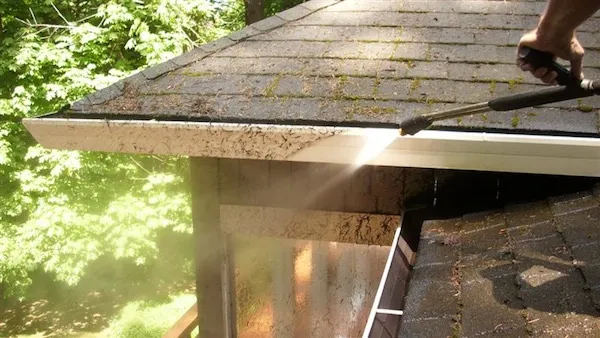
Most Portland homes need professional gutter cleaning twice a year — once in late October or November after the Douglas fir needle drop, and again in April or May after spring catkins and blossoms come down. Homes surrounded by mature conifers, common in Lake Oswego, the West Hills, and the wooded pockets of West Linn and Sellwood, usually need a third cleaning in mid-to-late summer.
That’s the short answer. The longer answer is below, with the reasons specific to PNW tree cover, rainfall patterns, and the way Portland’s gutter problems actually fail.
The standard Portland gutter cleaning schedule
For roughly 80% of homes in the Portland metro, the right schedule looks like this:
| Visit | Window | What it clears | Why it matters |
|---|---|---|---|
| Fall cleaning | Late October – late November | Douglas fir needles, big-leaf maple leaves, shingle grit from summer | Sets the system up for atmospheric river season (Dec–Feb) |
| Spring cleaning | April – mid-May | Catkins, blossoms, seed pods, residual winter debris, washed-down roof moss | Clears spring rain backup; surfaces winter damage before summer |
| Optional summer touch-up | July – August | Ongoing fir needle drop, accumulated pollen, fire-season ember risk | Conifer-heavy properties only |
The fall cleaning is the non-negotiable one. Portland’s wet season runs roughly from mid-October through early June, with the heaviest atmospheric river events typically arriving in December and January. If your gutters are clogged when those events hit, water has nowhere to go except over the front edge or backward against the fascia.
Why twice a year is the baseline (not once)
Most online gutter-cleaning advice says “twice a year” and stops there — which sounds arbitrary if you’re new to PNW homeownership. Here’s the specific reasoning for Portland:
Conifer needles do not stop falling
Unlike a maple tree that drops everything in three weeks of October, Douglas fir and western red cedar shed needles continuously. The heaviest drop is October–November, but a mature fir keeps shedding through winter, spring, and summer. One cleaning in the fall gets you to maybe February before the trough is full again.
Spring debris is real
Big-leaf maple catkins (the dangling pollen strings) blanket Portland roofs in April. Red alder cones, cherry blossom petals, oak pollen tassels, and the first fresh fir needles of the season all wash into gutters between March and May. By June, an uncleaned spring gutter is already starting to grow moss in the trough itself.
Roof moss washes down into gutters
Portland’s moss spore release peaks February through April. As roof moss loosens and dies through winter, large amounts of it wash off the roof and pile up in the gutter — especially on north-facing elevations. A spring cleaning catches this before it dams up downspouts in the next rain cycle.
When once a year is enough (and when it absolutely isn’t)
A handful of Portland homes can stretch to one cleaning per year. The honest profile:
- No trees within 50 feet of the roofline (rare in Portland metro)
- South-facing roof, no moss pressure
- Single-story with simple roofline (no dormers, no second-story bumpouts)
- Recently installed micro-mesh gutter guards that are still in good condition
Even these homes benefit from a quick visual inspection annually, but a hands-on cleaning every other fall can be sufficient.
For the opposite end — homes that need three cleanings or more — the profile is:
- Three or more mature Douglas firs within 50 feet
- Hillside or canyon lot (debris funnels onto the roof from above)
- Cedar shake roof (sheds heavier debris than asphalt)
- North-facing roof with moss history
- Two-story or three-story with multiple bumpouts and complex roofline
Most homes in the West Hills, Lake Oswego’s canopy neighborhoods, and the older parts of Sellwood, Eastmoreland, and Multnomah Village fit somewhere in the three-cleanings-per-year category.
What happens if you skip the fall cleaning
We get a lot of calls in mid-January and early February from homeowners who skipped fall. The damage pattern is consistent:
- Overflow at corners during the first atmospheric river. Water sheets over the front of the gutter and down the siding, leaving dark vertical streaks.
- Backflow against the fascia. Water gets behind the gutter and soaks into the fascia board. Wood that looked fine in October is soft by March.
- Ice and freeze cycles (when Portland gets them). Standing water in a clogged gutter freezes overnight, expands, and pulls hangers loose.
- Foundation pooling at downspout outlets that have backed up underground.
- Roof shingle damage from gutter dams holding water against the eave — the first 18 inches of shingle starts to degrade.
A January emergency cleaning costs the same as a November scheduled cleaning, but the damage that’s already happened doesn’t reverse. This is why the cost-benefit math on professional gutter cleaning is so heavily skewed toward “just stay on the schedule.”
Signs your gutters need cleaning right now
If you’re reading this between scheduled cleanings, here’s how to check from the ground:
- Water sheeting over the gutter edge during any meaningful rain
- Dark vertical streaks on siding below the gutter
- Visible debris poking above the gutter line
- Plants growing out of the gutter (this happens faster than most people expect — three months of seed-laden debris and you have a tiny ecosystem)
- Sagging or pulled-away sections
- Pooling water at foundation corners during rain
- Hollow ring vs thud — tap the bottom of the gutter with a broom handle. Hollow means clear; a dull thud means packed
If any two of those are showing, the cleaning is overdue.
Why PNW is different from other regions
National gutter-cleaning advice tends to assume a deciduous-leaf model — one big leaf drop in October, then nothing until spring. The Pacific Northwest pattern is different in three important ways:
- Conifer dominance. Douglas fir, western red cedar, and western hemlock drop needles year-round. The October surge is layered on top of a constant baseline.
- An eight-month rain season. From mid-October to early June, the system is being stress-tested almost continuously. Other regions get dry winters that mask gutter problems; Portland does not.
- Moss as a debris source. Roofs in Sellwood, the West Hills, and Milwaukie can be carrying significant moss biomass by spring, and that moss washes into the gutter system.
Twice a year, with a third visit for heavy-conifer homes, is the schedule that actually fits this pattern.
How to book the right windows
The two booking windows that fill up fastest in the Portland area:
- Fall (late October – mid-November): Book in September if you have a specific date in mind. By mid-October, the schedule is usually two-to-three weeks out for reputable companies.
- Spring (April – early May): Less crowded than fall but still busy. Two weeks ahead is comfortable.
Standing customers on a twice-yearly rotation typically get scheduled automatically — most established Portland companies (us included) keep a “recurring customer” list that gets first crack at the prime fall slots.
Quick Recap
- Twice a year is the Portland baseline: late October–November and April–May.
- Homes under heavy conifer cover (Lake Oswego, West Hills, parts of Sellwood and Multnomah Village) need a third midsummer cleaning.
- Fall is the non-negotiable visit — atmospheric river season starts in December and overwhelms clogged systems fast.
- Spring catches moss runoff, catkins, and winter debris that would otherwise dam downspouts through the wet May–June pattern.
- Look for water sheeting, dark siding streaks, sagging sections, or a dull thud when tapping the gutter — those mean overdue.
Frequently asked questions
- How often should I clean my gutters in Portland, OR?
- Most Portland, Oregon homes need gutter cleaning twice a year — once in late October or November after the Douglas fir needle drop, and once in April or May after spring blossom drop. Homes surrounded by mature conifers often need a third visit in mid-to-late summer. Homes with no overhanging trees can sometimes stretch to once a year, but that is rare in the Portland metro tree canopy.
- When is the absolute latest I should clean gutters before winter?
- The latest reasonable date to clean Portland gutters before winter is the last week of November. By early December the steady Pacific Northwest rains turn dry fir needles into a wet mat that holds water against the fascia, and atmospheric river events between December and February overwhelm any clogged system. Booking before Thanksgiving is the standard rule for Portland homeowners who want to avoid winter overflow damage.
- Do I really need a spring gutter cleaning if I cleaned them in the fall?
- Yes — spring gutter cleaning is just as important as fall in the Portland area. Douglas fir, big-leaf maple, and red alder all drop catkins, seed pods, and early-spring debris between March and May. Roof moss spore release peaks February through April, and washed-down moss accumulates in gutters. A spring cleaning prevents summer overflow during the wet May and June rain pattern.
- How can I tell if my gutters need cleaning right now?
- Several signs mean your Portland gutters need cleaning now: water sheeting over the gutter edge during rain, dark streaks running down siding below the gutter, plants growing out of the gutter itself, sagging gutter sections, water pooling at foundation corners, or visible debris from the ground. Tap on the bottom of the gutter — a thud rather than a hollow ring means it's packed full and overdue.
- Does living under Douglas fir trees really require more frequent cleaning?
- Yes — Douglas fir cover dramatically increases gutter cleaning frequency in Portland. Fir needles drop heaviest in October and November, but a mature Douglas fir sheds needles year-round, and the needles weave into a dense mat that traps everything else. Homes with three or more mature firs within 50 feet of the roofline typically need three cleanings per year — late fall, spring, and a midsummer touch-up before fire season.
- What about gutter guards — do they change the cleaning schedule?
- Gutter guards reduce cleaning frequency but rarely eliminate it in the Portland area. Micro-mesh and fine-pitch screens can stretch a twice-yearly schedule to once a year on most homes, but they still need periodic maintenance because fine debris and moss accumulate on top. Foam inserts and large-screen guards generally do not work in PNW conifer country — fir needles slip through or compact on top of them.
- Are rental properties or vacation homes on a different schedule?
- Rental properties and vacation homes in the Portland area should be on the same twice-yearly cleaning schedule, with the added benefit of photo-documented service records. Property managers handling multi-unit buildings often standardize on October and April routes. Out-of-state owners benefit most from photo proof on every cleaning — it removes the need to drive by and verify the work was done.
Related guides
-
11 min read
Pacific Northwest Seasonal Home Maintenance Calendar
A month-by-month Portland exterior home maintenance calendar covering gutters, moss, windows, pressure washing...
-
9 min read
How Much Does Gutter Cleaning Cost in Portland?
Portland gutter cleaning typically runs $150-$325 for single-story homes and $225-$450 for two-story. See the ...
-
9 min read
DIY vs Professional Gutter Cleaning: An Honest Portland Guide
Honest take from a 16-year Portland contractor: when DIY gutter cleaning is fine, when to call a pro, ladder s...
Ready to book?
Want gutters, moss, and windows on one annual schedule? Home Exterior Care Plan
Property manager, HOA, or commercial site? Property managers & HOAs Commercial cleaning
Need help with your Portland gutters?
Same-day quotes by phone. No high-pressure sales. Bonded & insured · Family-owned since 2009
Happy with our work? Leave a Google review · Find us on Google Maps