
Portland guide · 11 min read
How to Remove Roof Moss in Portland Without Wrecking Your Roof
Portland roof moss should be removed using soft-wash chemistry and hand-brushing, not high-pressure spray, which strips shingle granules and voids warranties. Professional moss treatment in Portland typically lasts 2-4 years, extends roof lifespan by 5-10 years, and should use salmon-stream-safe products. Zinc or copper strips at the ridge add ongoing protection. Cedar shake requires its own gentler protocol.
By Monte Wallenstein Published
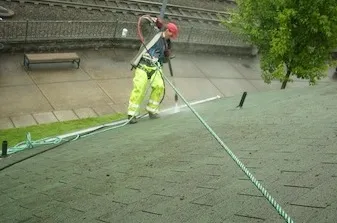
Roof moss removal in Portland should be done with soft-wash chemistry and gentle hand-brushing — not high-pressure spray. A correctly applied treatment lasts two to four years, can extend asphalt shingle roof life by five to ten years, and uses salmon-stream-safe products when handled by a reputable contractor.
This is the part of the trade where most damage gets done by well-meaning homeowners and aggressive pressure-washing companies. Below is what actually works in the PNW, what to avoid, and how to think about the lifecycle of a Portland roof.
Why Portland roofs grow moss
The Pacific Northwest is a moss climate. Long, mild winters; an eight-month wet season; consistent humidity; abundant shade from Douglas fir and western red cedar canopy. Spore release peaks February through April, and a roof that’s clean in November can have visible moss colonies starting on north-facing slopes by the following spring.
Three conditions accelerate the problem:
- Shade. Roofs under heavy tree canopy in Lake Oswego, the West Hills, and the canopy pockets of Sellwood, Eastmoreland, and West Linn carry the heaviest moss loads. North-facing slopes go first.
- Roof age. Roofs older than seven years have weathered enough granule loss to give moss a foothold. Newer roofs resist longer because the granule layer is intact and the shingles are smoother.
- Debris. Gutters packed with Douglas fir needles keep the eaves wet. Wet eaves grow moss first.
What moss actually does to a roof:
- Lifts shingle edges. Moss roots wedge between courses, prying shingles up.
- Holds moisture against the surface. Wet shingles in winter, then UV exposure in summer, accelerates granule loss.
- Traps debris. A moss mat catches needles and pollen, which feeds more growth.
- Damages flashing. Around chimneys, skylights, and valleys, moss growth pushes flashing away from the deck and creates leak paths.
By the time moss is visible from the ground in green or black patches, the underlying damage is already 6–18 months ahead of what you can see.
Soft-wash vs pressure washing: not the same thing
Soft-wash and pressure-wash are different methods, not just different settings on the same machine. Mixing them up is how roofs get damaged.
| Method | Pressure | Used for | Roof-safe? |
|---|---|---|---|
| Soft-wash | Low (under 500 PSI, often closer to garden-hose pressure) | Roofs, siding, painted surfaces, delicate stone | YES |
| High-pressure wash | 2,000+ PSI | Concrete only — driveways, walkways, foundations | NO — destroys shingles |
Pressure washing an asphalt shingle roof is one of the most damaging things you can do to it. The high-velocity spray:
- Strips protective granules from the shingle surface, dramatically shortening roof life.
- Forces water under shingle edges, into the underlayment and decking.
- Voids most asphalt shingle warranties — manufacturers explicitly disallow high-pressure cleaning.
- Does not actually kill the moss roots, so regrowth happens within months.
We see this damage on Portland roofs after homeowners hire a generalist pressure-washing company that does not understand roof chemistry. The roof looks “clean” for a season, then ages five years in two.
A proper soft-wash uses chemistry to kill the moss and gentle agitation to remove what’s left. The chemistry does the work; the technique just helps it land where it needs to.
What a professional treatment actually looks like
Here is the typical step-by-step for professional roof moss removal on a Portland home:
- Walk the roof and assess. Identify moss density, shingle condition, flashing condition, slope, walkability, and any soft spots in the decking.
- Tarp the landscape. Garden beds, vegetable gardens, ornamentals — anything chemistry might drift onto gets covered.
- Apply soft-wash treatment. A low-pressure application of biodegradable moss-killing solution. Industry-standard chemistry uses sodium-hypochlorite-based blends, zinc-sulfate-based blends, or proprietary biodegradable formulations — applied at the correct dilution.
- Dwell time. The solution sits for 10–30 minutes depending on chemistry and moss density. This is when the actual kill happens.
- Hand-brush the heaviest mats. Where moss is thick, a gentle hand-brushing with a soft-bristle tool removes dead biomass. NO metal scrapers, ever — they shred shingles.
- Low-pressure rinse. A garden-hose-pressure rinse clears residue.
- Gutter clean follow-up. Any moss that washed off the roof is now in the gutter — flush it out so it doesn’t dam downspouts.
- Optional zinc/copper strips at the ridge for ongoing protection.
The whole process takes a half day to a full day depending on roof size and complexity. We never high-pressure, never use metal scrapers, never walk on dry cedar shake.
What to avoid: contractor red flags
Watch out for any of the following on a Portland roof moss quote:
- High-pressure spray on shingles. This is the cardinal sin of roof cleaning. Walk away.
- Metal scrapers or rakes. These strip granules and tear shingle edges.
- Straight oxalic acid runoff without containment. Oxalic acid has legitimate uses (cedar restoration), but uncontained runoff into storm drains is a salmon-watershed problem.
- Walking on dry cedar shake or aged tile. Both crack under foot weight.
- No tarping of garden beds. Tells you they don’t think about chemistry containment.
- “Lifetime moss guarantee.” No honest Portland company offers this. Moss comes back; a real guarantee is 2-3 years with conditions.
- No proof of insurance. Ask for a certificate of liability and workers’ comp before anyone climbs your roof.
Zinc and copper strips: do they work?
Yes — and they’re one of the highest-ROI upgrades you can add to a Portland roof.
How they work: A thin metal strip installed at or near the ridge releases trace zinc or copper ions in rainwater. As water runs down the slope, those ions create a microbially hostile environment that prevents moss from establishing.
Effectiveness: Strong for the first 3–5 feet below the strip; diminishes farther down. On a typical Portland roof with one ridge strip, the upper two-thirds of each slope sees real protection. The bottom third may still need periodic touch-up treatment.
Best installed: During the first professional treatment, while the roof is already being worked on. Retrofitting later is possible but more expensive per linear foot.
Cost expectation: Adds maybe 15–25% to a moss treatment cost in the Portland market. Pays back over the treatment cycle by extending the time to next full application.
Cedar shake: a different protocol
Cedar shake roofs in Portland — common in older neighborhoods in Lake Oswego, the West Hills, and parts of West Linn — require their own approach. They are not treated like asphalt.
The cedar shake protocol:
- No walking on dry shake. It cracks. We work from ladders and only step on shake when it’s been wetted and inspected for soundness.
- Gentle biodegradable cleaner. No sodium hypochlorite at high concentration — it degrades wood fiber and lightens cedar unevenly.
- Hand-brushing only. Soft bristle on heavy spots. No pressure, no metal.
- Optional oxalic-acid restoration for severely darkened shake — but applied with containment and full rinse capture so nothing reaches storm drains.
- Zinc strips work on cedar the same way they work on asphalt — sometimes better, because cedar has more surface texture for ion contact.
Cedar shake roof maintenance is more time-intensive than asphalt, but the lifespan extension is proportionally larger. A well-maintained cedar roof in Portland can run 40–50 years; a neglected one fails at 20.
Salmon-safe and pet-safe chemistry
The Portland metro sits inside the Willamette River watershed, which feeds salmon habitat. Storm drains generally connect to surface waters. This matters more than most homeowners realize when choosing a roof cleaning contractor.
What we look for:
- Biodegradable surfactants that break down before reaching storm drains.
- Low-concentration applications rather than industrial-strength dumps.
- Tarped containment of garden beds and any rinse-water capture where possible.
- No straight oxalic acid runoff into uncontained landscape.
- No copper sulfate flood treatments that can persist in soil and water.
A reputable Portland roof moss company should be able to answer “what’s in this and what happens to the runoff?” without hedging.
How long the treatment lasts
Realistic expectations for a properly applied Portland roof moss treatment:
| Roof type and exposure | Typical treatment lifespan |
|---|---|
| South-facing, sun-exposed, light tree cover | 3–4 years |
| Mixed exposure, average tree cover | 2–3 years |
| North-facing, heavy conifer cover | 1.5–2.5 years |
| Cedar shake under heavy canopy | 1.5–2 years between touch-ups |
A reasonable maintenance cycle is full treatment every 2–4 years, with annual visual inspection during your regular gutter cleaning visits. Spot treatment of any new growth between full cycles keeps things manageable.
Roof lifespan extension: the real math
A typical asphalt shingle roof in Portland is rated for 20–25 years but often fails earlier in PNW conditions because of moss-accelerated granule loss. Controlled moss removal on a 2-4 year cycle reliably adds 5–10 years to that working life.
For a 25-square Portland roof (a common size), replacement runs roughly $10,000–$18,000 in 2026 depending on materials. Five years of additional roof life is worth a meaningful multiple of any treatment cost. This is the cost-benefit case for staying on the schedule rather than waiting until moss is visible from the curb.
Quick Recap
- Soft-wash chemistry, not high-pressure spray. Pressure washing destroys asphalt shingles and voids warranties.
- A proper Portland treatment lasts 2–4 years and extends roof life by 5–10 years.
- Zinc or copper strips at the ridge add ongoing protection; install during the first treatment cycle for best ROI.
- Cedar shake needs its own protocol — gentler chemistry, no walking on dry shake, optional oxalic-acid restoration with containment.
- Salmon-watershed-safe products and tarped containment are non-negotiable in the Portland metro.
Frequently asked questions
- How do you remove moss from a roof in Portland without damaging it?
- The safe method for removing moss from a Portland roof is a soft-wash chemical treatment paired with gentle hand-brushing — never high-pressure spray. Pressure washing strips the protective granules off asphalt shingles, voids most roofing warranties, and can shorten roof life by years. A professional Portland moss removal applies a low-pressure soap-based or zinc-sulfate solution, lets it dwell, then rinses or brushes residue without abrading the shingle.
- How long does roof moss treatment last in Portland, Oregon?
- Professional roof moss treatment in Portland, Oregon typically lasts two to four years before another full application is needed. The exact duration depends on tree cover, roof exposure, slope, and whether zinc or copper strips were installed at the ridge. North-facing roofs and properties under heavy conifer cover see faster regrowth — closer to two years. Sun-exposed south-facing roofs can stretch to four years.
- Is roof moss removal safe for cedar shake roofs?
- Roof moss removal is safe for cedar shake roofs only when done with a soft-wash, low-pressure, low-chemistry approach. High-pressure water and harsh sodium-hypochlorite blends both damage cedar — pressure shreds the fiber surface and bleach degrades the wood. A reputable Portland cedar shake protocol uses a gentle biodegradable cleaner, hand-brushing only on the worst spots, and avoids walking on dry shake entirely.
- Are zinc and copper strips actually effective on Portland roofs?
- Yes — zinc and copper strips installed at the roof ridge are effective at slowing moss regrowth on Portland roofs. Rainwater carries trace zinc or copper ions down the slope, creating an environment moss cannot easily colonize. The effect is strongest for the first 3-5 feet below the strip and diminishes farther down. Strips are most cost-effective when installed during the first treatment cycle, not retrofitted years later.
- Are the chemicals you use safe for pets, gardens, and salmon streams?
- Reputable Portland roof moss companies use products formulated to be safe for pets, gardens, and salmon streams. We use biodegradable, low-toxicity formulations and tarp landscape beds before application. Avoid any contractor using straight oxalic acid or undiluted sodium hypochlorite at high concentrations — both can damage plants and harm aquatic life if they reach storm drains. Oregon's salmon-watershed protections apply throughout the Portland metro.
- Why does Portland have so much roof moss compared to other cities?
- Portland has heavy roof moss because the Pacific Northwest climate is ideal for it: an eight-month wet season, moderate temperatures, abundant shade from conifer canopy, and consistent humidity. Spore release peaks February through April. Most Portland-area homes have at least some moss biomass on north-facing slopes by year five of roof age, and homes under heavy tree cover often have visible moss by year three.
- Will roof moss removal really extend the life of my roof?
- Yes — controlled moss removal extends the life of an asphalt shingle roof in Portland by approximately 5 to 10 years. Moss roots wedge under shingle edges, lift them, trap moisture against the surface, and accelerate granule loss. Removing established moss and maintaining the roof on a 2-4 year treatment cycle can take a 20-year roof to 25-30 years of usable life — a meaningful return on the treatment cost.
Related guides
-
11 min read
Pacific Northwest Seasonal Home Maintenance Calendar
A month-by-month Portland exterior home maintenance calendar covering gutters, moss, windows, pressure washing...
-
8 min read
How Often Should Portland Homeowners Clean Their Gutters?
Portland gutters need cleaning twice a year minimum — late fall and spring. Homes under conifer cover need thr...
Ready to book?
Want gutters, moss, and windows on one annual schedule? Home Exterior Care Plan
Property manager, HOA, or commercial site? Property managers & HOAs Commercial cleaning
Need help with your Portland roof?
Same-day quotes by phone. No high-pressure sales. Bonded & insured · Family-owned since 2009
Happy with our work? Leave a Google review · Find us on Google Maps